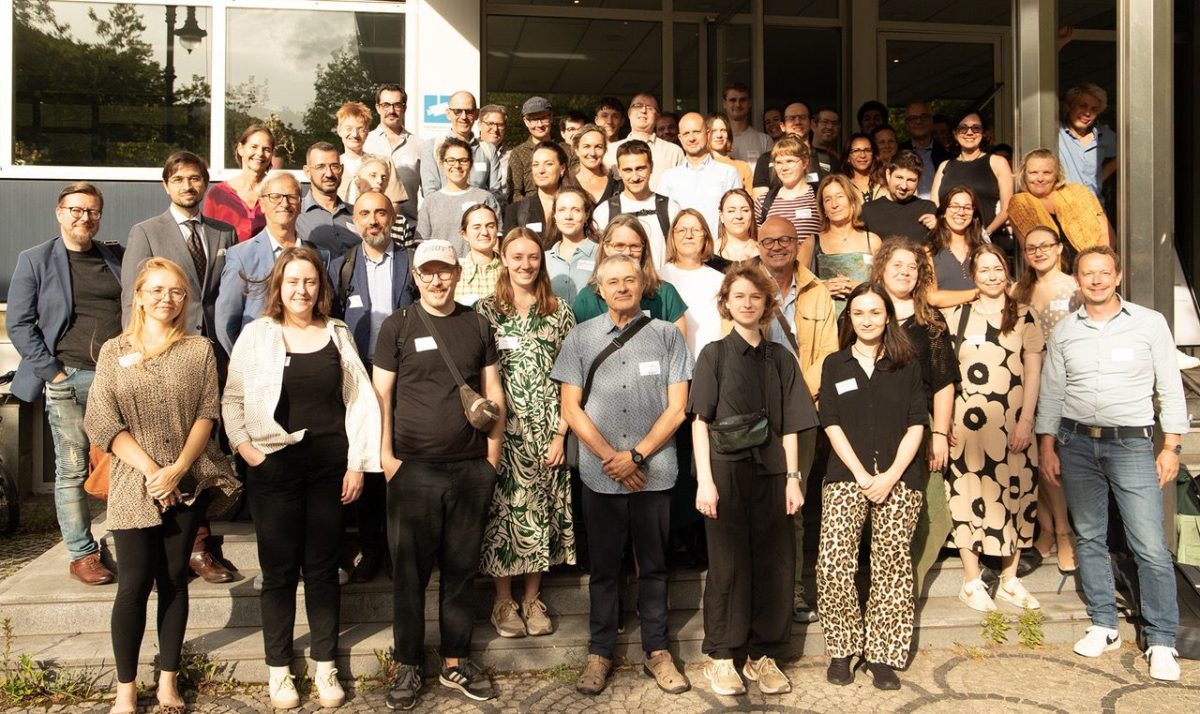
In a panel on digital payments, we gave four presentations on perspectives on digital payments. The panel was part of the Mid-term Conference 2025 of the Research Network “Economic Sociology” of the European Sociological Association (ESA).
While money and markets are well-researched topics of economic sociology, payments and their technologies have received less attention. However, being able to make and receive payments is the precondition for much economic and market-based activity. Therefore, we conducted a panel that put the act and the ability of »moving« money from A to B – often considered as a background activity of ‘boring’ infrastructure – to the center stage.
Newer (potential) payment systems like cryptocurrencies and central bank digital currencies (CBDCs) have captured the imagination of the public. Recent geopolitical developments have pushed the politics of payment systems front-stage, e.g., Russia’s exclusion from SWIFT, or the introduction of BRICS PAY. Still, much of the public discussion remains centered on cash and cashlessness. However the brunt of everyday retail payment system runs on card infrastructure – which is in itself quite diverse, i.e. comprised of national (Girocard, debit cards) and global (credit cards), private and (semi-)public, or open and closed systems. Thinking sociologically about the emergence, the operation, and the economic and everyday effects of various payments systems will benefit social-scientific as well as public and policy discussions on the future of money and payments.
Assetization of transactional data
The act of digital exchange also generates data, giving companies the opportunity to turn an anonymous audience into known individuals: Transaction data becomes the central resource for calculating behavioral predictions and risks. Different forms of payment come with specific value propositions for users: prestige and status, convenience and experience. The datafied practices of users are abstracted in data models, re-designed as a friction-less experience and offered to users in the form of technical
behavioral options. How are platforms and transaction data used by e-commerce or brick-and-mortar retail, for example, to identify and manipulate existing vulnerabilities? And how does this reinforce
existing inequalities?
Payment and Consumption
Credit cards, mobile payment apps, or buy now pay later services are devices that render »things, behaviors and processes economic« (Muniesa et al. 2007: 3). In this perspective, payment systems not only undergird consumption, but also format consumers’ behavior and consumption patterns. What kind of economic subjectivities do these novel payment services produce? And how do they devise consumption by relating consumers, merchants, and advertiser to each other in specific ways?
State Alternative Infrastructures
States are actively involved in developing alternative payment infrastructures. In some cases, these systems are built to serve specific social groups – such as welfare recipients – with the goal of restrict –
ing and monitoring their spending. In others, they respond to exclusion from international payment networks, as in Russia‘s exclusion from the SWIFT system. Such national infrastructures aim to strengthen geopolitical autonomy. How do payment infrastructures become instruments of state control and geopolitical strategy? What role do public-private partnerships play in shaping these systems? What does this mean for the future political economy of payments?
The Sociology of Digital Payments: Infrastructure, Governance & Trust
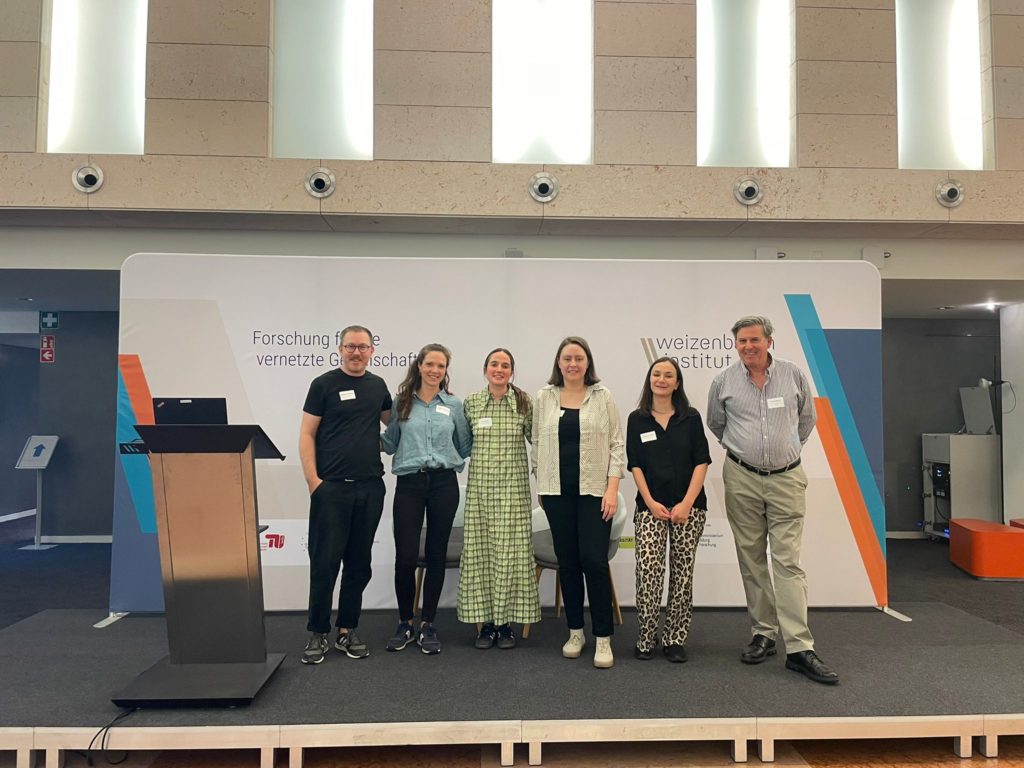
We presented four contributions as part of Panel 5.3 #Digital. Chair: Daniel Maman (Ben Gurion University).
- “Sanctions, Financial Infrastructures and Authoritarian Control in Russia” —Roxana Ehlke (JLU Gießen)
- “Making Cents of(f) Mobile Payments: How Payment Apps Re-Intermediate Money and Shape User Experience?” — Tatjana Graf, Markus Unternährer (University of Lucerne)
- “Payment Cards for Asylum Seekers as Containment Infrastructures” — Alexandra Keiner (Weizenbaum Institute)
- “Beyond Payments: Marketing Technology for Data Monetization” — Antonia Steigerwald (University of Lucerne)
